Benefits Selection, From Manual Workflow to Scalable System
TL;DR
Replaced a 3–10 day manual, ops-dependent benefits workflow with embedded self-serve plan selection inside international onboarding.
Took over a stalled custom-plan initiative and re-scoped it into a curated, scalable model aligned with legal and engineering constraints.
Impact
$5.5M increase in profit
92% reduction in benefits-related onboarding tickets
Increased benefits attachment per hire
Rolled out globally (only benefits initiative that year)
Established reusable foundation for future employee self-serve enrollment
Pebl (formerly Velocity Global) — B2B
AI-powered global Employer of Record platform — companies use Pebl to hire, pay, and manage employees in 185+ countries without setting up local entities.
Why This Mattered
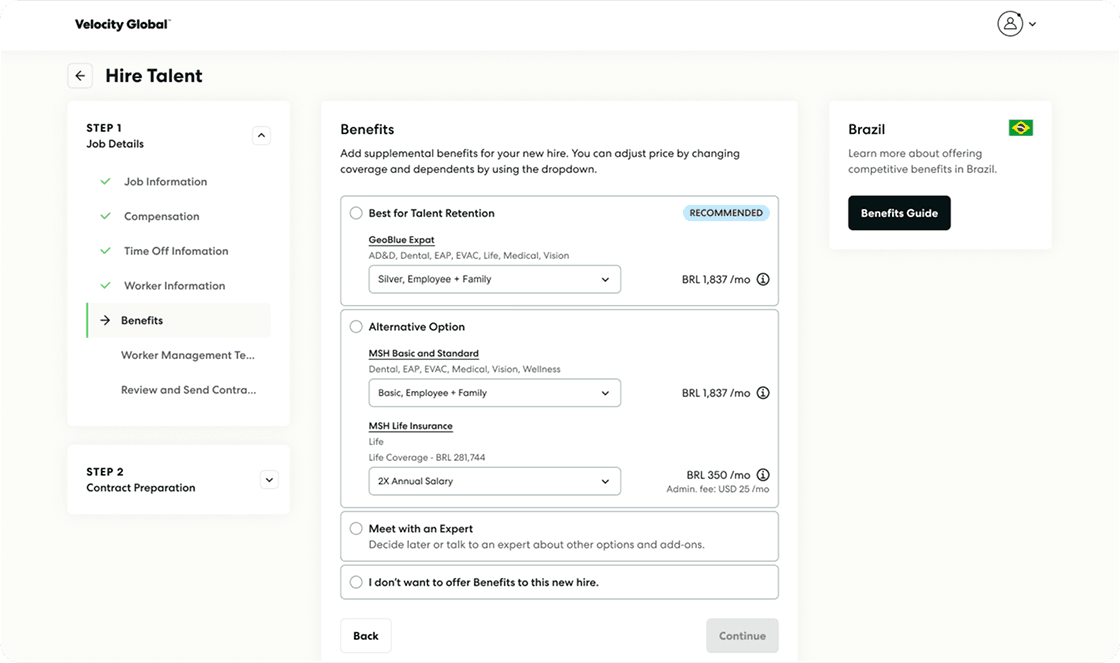
Before launch, benefits selection ended with “We’ll contact you to finalize these details.”
User: Hiring managers couldn’t confidently send offer letters until benefits were resolved. Each hire triggered follow-up emails, uncertainty, and start-date delays.
Benefits Ops Team: Every hire required - country evaluation → plan synthesis → documentation → email loop → assignment
As hiring scaled, workload scaled linearly. Turnaround ranged from days to weeks depending on country complexity.
Business: Benefits carried ~53% margin, but revenue was constrained by operational throughput. Growth required proportional headcount expansion.
The system functioned but it didn’t scale.
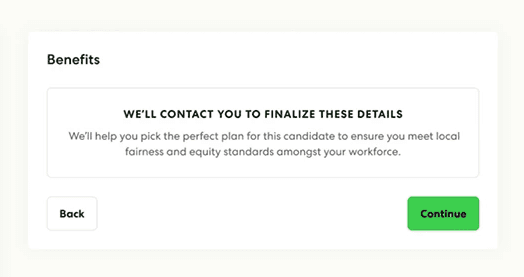
What Shipped
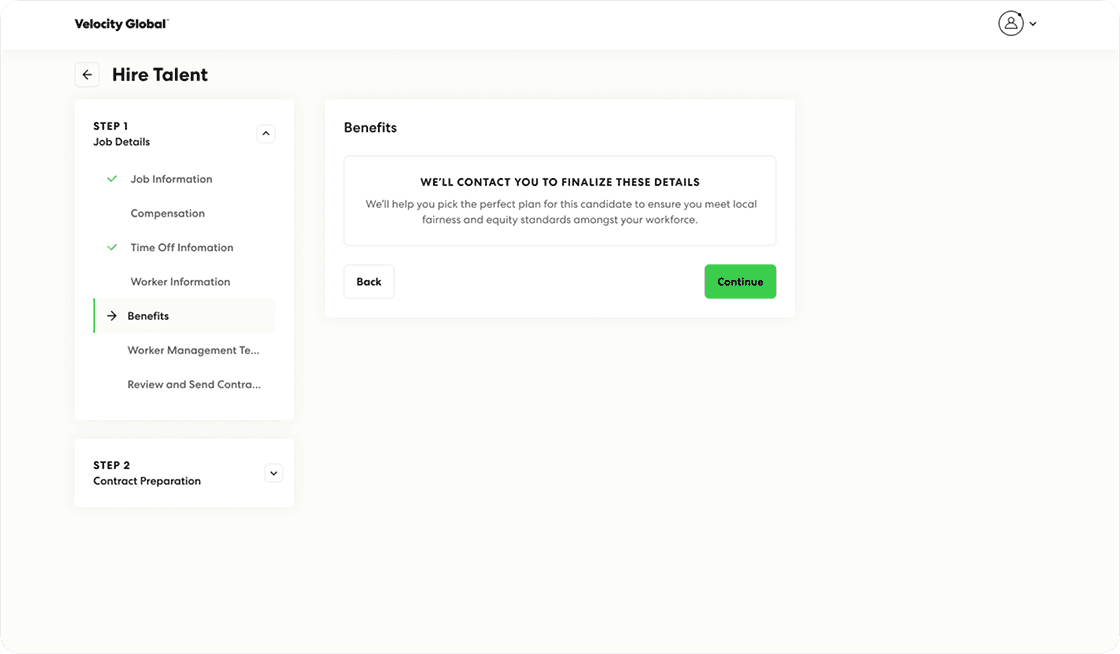
I replaced an inherited custom-plan builder direction with a curated two-plan model embedded directly into onboarding.
Shipped Experience
Recommended Plan
Alternative Option
Meet with an Expert
Don’t Offer Benefits
Key shifts:
Estimated pricing based on common dependent patterns (no sensitive pre-hire data collection)
Immediate pricing visibility
Progressive disclosure clarifying impact on future hires in the same country
Standard hires required no ops review
Benefits selection became part of the hiring flow not a downstream dependency.
What Shaped the Work
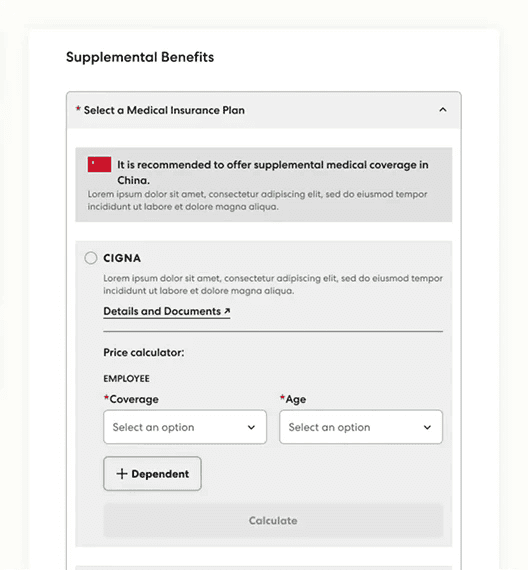
Inherited Custom Plan Builder
Too many plan combinations required overlap checks and sensitive pre-offer inputs (age + dependants)
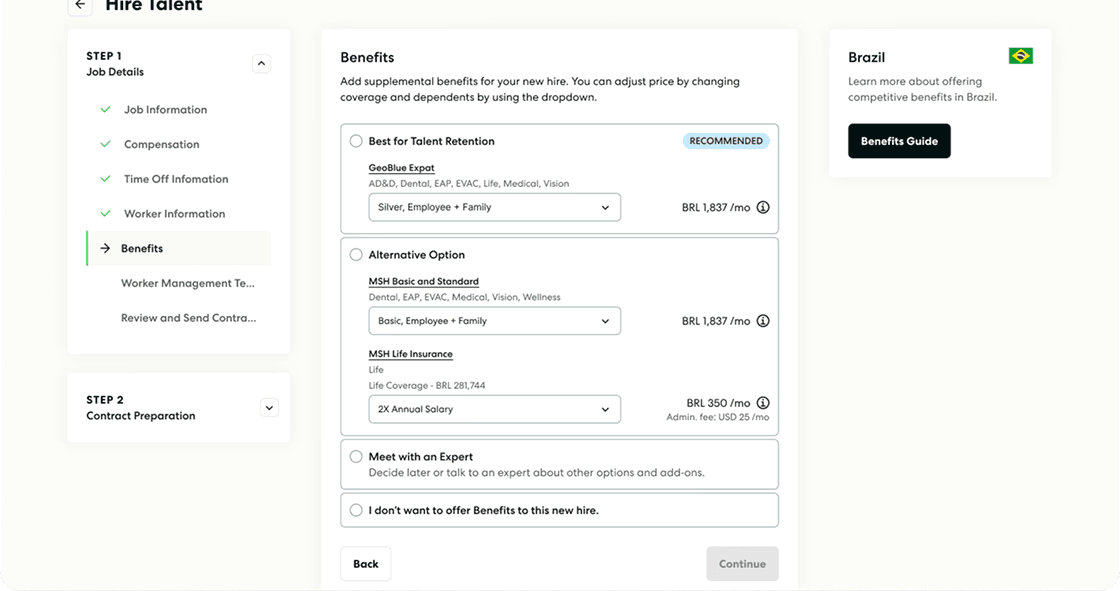
Shipped Curated Two-Plan Model
Curated plans embedded pricing without custom packaging or sensitive data.
Key Decision
Replace both the full custom builder and the single-plan default with a curated two-plan model.
The original direction prioritized configurability. I intentionally constrained flexibility to:
Avoid legal exposure
Prevent backend pricing expansion
Protect delivery timelines
Ensure operational scalability
The goal wasn’t to give users more control — it was to provide enough contrast for confident decisions without escalation.
Tension & Resolution
Design Principles Used
Outcome
Benefits shifted from an operational bottleneck to a scalable revenue system embedded in onboarding.
Operationally, BenOps moved from routine processing to exception handling — enabling growth without proportional headcount expansion.
92%
Reduction in onboarding tickets
$5.5M
Profit Increase
17%
Increase in attachment per hire
Additional Impact & Calculations
In Closing
This project transformed benefits from an operational bottleneck into a scalable revenue system embedded in onboarding.
It demonstrated how intentionally constraining flexibility can increase user confidence, reduce operational load, and unlock profitable growth.
What This Unlocked
Reflection & Transferability
Role
Sole designer post-discovery • Owned flows, UX writing, scope, tickets, QA • Balanced legal + engineering to ship MVP in < 1 quarter
Impact Type
Revenue growth + operational scalability + platform enablement
Team
PM, Eng (6), BenOps, Legal